
By PulsHealth. Updated
Real data exampleResearch reviewed . Figures use example Apple Health data.
What is walking heart rate average?
Apple Watch estimates average heart rate while walking using both everyday walking samples and walking workout readings. It is a derived daily measure, not a heart-rate sample for every step and not necessarily the average of a single walk. Apple's documentation says recent estimates may be deleted and replaced as information improves; this type is automatically created by HealthKit and cannot be written by an app.
Walking pace, hills, heat, carried load and medication can change heart rate at the same apparent activity level. A lower reading is therefore not automatically evidence of better fitness.
How often is it recorded?
In the example year, 527 records covered 363 of 365 reporting days. The July–September window had 175 records on all 92 days, with two source groups present on 80 shared days. Each source group's median positive start gap was about 24 hours; pooled gaps would mix streams and overstate cadence.
One focus day had multiple records within a source group. This can occur in a store with evolving estimates or historical source records; the snapshot cannot identify every deleted-and-replaced relationship. Sufficient walking/background data is needed for Apple's estimate, so absent records do not mean no walking occurred. Apple's heart-rate guide explains activity-dependent background collection.
What does the example distribution look like?
| Window | Median | Recorded range |
|---|---|---|
| October 2025–September 2026 | 87.5 bpm | 70–120 bpm |
| July–September 2026 | 88 bpm | 73–116.5 bpm |
Both focus source groups had a median of 88 bpm. No universal healthy walking-average range follows from these values. The analysis retained twelve full-year source/context IQR flags and inspected extremes with neighboring observations; a statistical tail is not a diagnosis or a proven artifact.
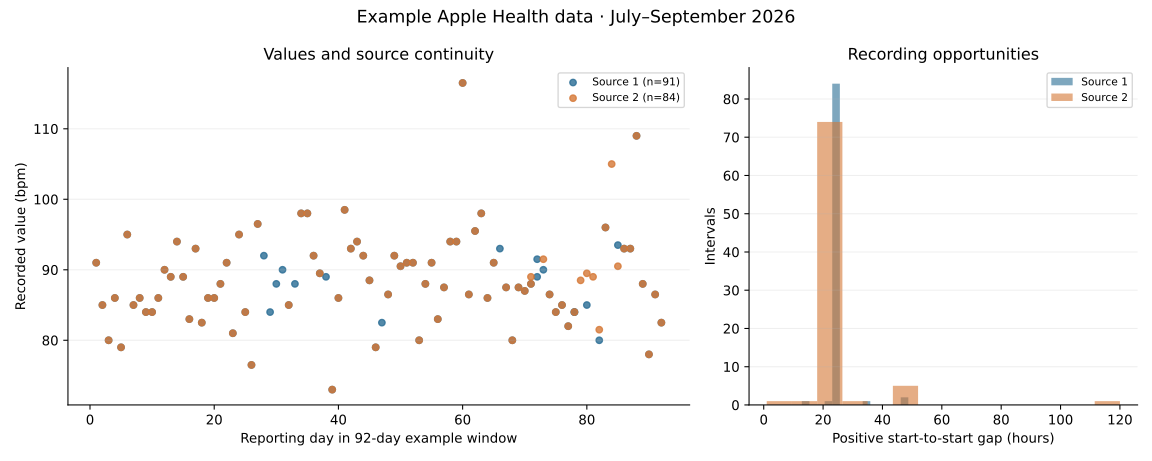
Example values and recording cadence
July–September 2026 example data. Sources shown separately; gaps represent recording opportunities, not physiological cycles or clinical limits.
View full-size figureHow this figure was made
Start-selected records in a fixed reporting calendar; relative reporting-day positions remove exact timestamps. All observations retained. Gap histograms use positive consecutive starts within each source group, including gaps across separate days or workouts. No device identity or causal interpretation is inferred.
Why does a walking-average record overlap sleep?
The example's median stored interval was about 23.9 hours. A daily interval can span walking, resting, exercise and sleep, but its value summarizes selected walking readings. Temporal overlap therefore does not show walking during sleep, and a row overlapping a workout is not the workout's mean pulse.
For changes within a walk, use heart-rate samples and the workout interval. For sleeping pulse, match those samples to Sleep Analysis. This distinction matters more than comparing values in artificial sleep/workout groups constructed from a broad daily summary.
How can I make comparisons useful?
Compare a consistent source over time and consider the mix of walking conditions. A change in hills or walking pace can shift the average without a change in fitness. Two dates with the same total step count can still have very different exertion.
Resting heart rate provides waking-rest context, while VO2 max estimates aerobic capacity during qualifying activities. Same-source daily comparisons were investigated in the research; shared dates do not make their measurement windows equivalent or establish causation. Exported records do not include complete pace, terrain, weather or medication context.
How should I summarize the records?
This is a discrete bpm value: do not sum it. State whether a trend uses each sample or one selected summary per reporting day, and preserve missing dates. Keep source revisions so a source change remains visible. An unexpected persistent change is worth reviewing with symptoms and actual walking conditions rather than assigning a fitness grade from the number alone.
Understanding your records
Recording frequency, source and coverage affect what you can conclude from this data. Read the recording guide.
- One record
- Derived discrete estimate; stored intervals do not prove continuous physiological measurement.
- Frequency
- Assess positive start gaps within source groups; a missing day is not zero.
- Context
- Separate source histories and preserve metadata; overlap is temporal context only.
- Coverage and gaps
- Full reporting year and 92-day focus examined; unavailable observations remain missing.
- Summaries
- Use discrete summaries; distinguish samples from reporting days and never sum rates.
- Metadata
- Review optional test/activity metadata and source versions before comparisons.
Recording guidance reviewed 2026-10-14
Reference ranges
These source-specific ranges provide context; they are separate from the personal values in any data examples and do not diagnose a condition.
Interpretation
- normal
- No universal normal walking-average range; pace, terrain and conditions matter.
| Population | normal |
|---|---|
| Interpretation | No universal normal walking-average range; pace, terrain and conditions matter. |