
By PulsHealth. Updated
Real data exampleResearch reviewed . Figures use example Apple Health data.
What is a Stand Hour in Apple Health?
A Stand Hour records whether the user stood up and moved for at least one continuous minute during the sample interval. It is a category, not sixty minutes of standing. Apple documents the two category values.
| Stored code | Meaning | What it does not mean |
|---|---|---|
| 0 — stood | The standing-and-moving criterion was met | Standing throughout the hour |
| 1 — idle | The criterion was not met for that sample | A directly measured hour of sitting |
| No entry | No exported observation | An idle result or zero activity |
These codes must not be averaged: a numerical average of 0 and 1 is not a standing duration. Count qualifying hourly intervals after resolving overlapping sources instead.
What did example hourly records show?
The reporting year contained 8,975 entries across all 365 days, distributed across source groups. The largest July–September source group supplied 1,177 records across all 92 days: 1,061 stood and 116 idle. Each selected-source interval lasted one hour, and no unexpected category codes were found.
The figure separates the outcomes from their interval duration. A high share of stood records describes the stored entries, not every waking hour: absent intervals have no outcome. It also does not show how many minutes were spent standing within each successful hour.
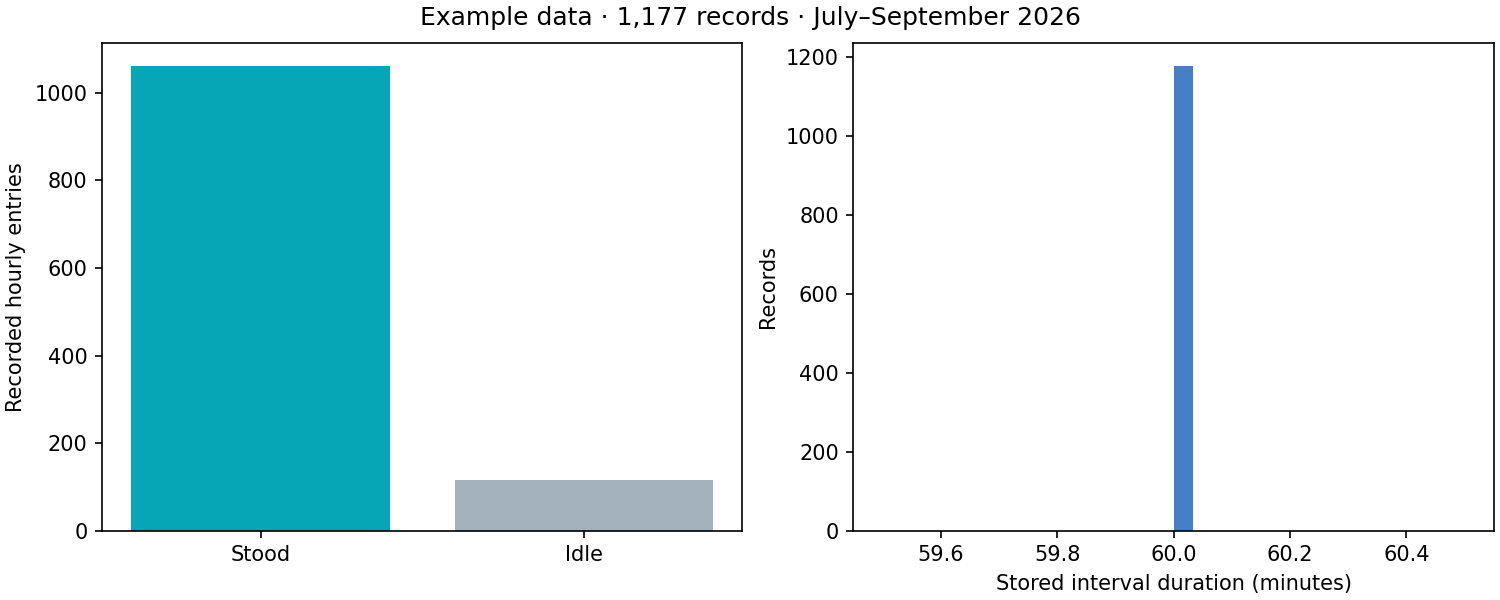
Stand Hour outcomes and hourly intervals
Example July–September 2026 data from the source group with the most raw records in the focus window. Counts describe stored observations, not a recording-opportunity denominator or population norms.
View full-size figureHow this figure was made
Source selected by focus-window record count, grouping bundle identifier plus source display name and combining revisions. Half-open reporting window in America/Los_Angeles. Intervals selected by start; all retained observations plotted. Sources kept separate; no dates or source names shown.
Why can the ring differ from raw record counts?
The daily Activity summary stores stand-ring progress separately. Several sources can contribute records covering the same hour, so counting all stood rows may exceed the daily ring value. Source selection, hourly overlap and the reporting calendar matter before making that comparison.
Do not infer that the ring is wrong because a database count differs. Use the daily summary for the recorded ring value and the raw categories for investigating intervals. Goals are configurable; the goal is not a medical threshold.
How should workout and sleep overlap be interpreted?
An hourly category can overlap a workout or sleep interval even when the threshold was achieved outside the overlapping minutes. These records do not locate the successful minute inside the hour. Thus, a stood hour overlapping recorded sleep is not evidence of standing while asleep.
Similarly, one concentrated workout can generate many steps but credit only a limited number of distinct stand hours. Step Count captures volume; Stand Hour captures whether the threshold was achieved in separate intervals. Reviewing both reveals timing without turning either into a continuous sitting sensor.
Is Stand Hour the same as Stand Time?
No. Apple Stand Time is a cumulative quantity measured in minutes. Stand Hour stores threshold success. A short movement break and sustained walking can both produce one stood category while accumulating different numbers of stand minutes.
The research compared source-paired daily category successes with stand-time sums. Their association depended on the source pairing, illustrating why mixing all source streams can obscure the relationship. Observed idle-only days retain zero stood successes; entirely unrecorded days remain missing.
What can explain missing credit?
The Watch must have an opportunity to detect activity. Apple notes that disabling Wrist Detection prevents tracking Stand progress. Apple’s measurement guidance is a useful first check alongside watch wear, permissions and source history.
Avoid claiming exact sensor thresholds beyond Apple’s documented standing-and-moving rule. Quiet standing can differ from credited activity, and these categories cannot establish clinical sitting time, fall risk, blood-glucose response or the health effect of a particular break.
Understanding your records
Recording frequency, source and coverage affect what you can conclude from this data. Read the recording guide.