
By PulsHealth. Updated
Real data exampleResearch reviewed . Figures use example Apple Health data.
What does Apple Health weight measure?
Body Mass is a weight measurement, usually supplied by a scale or entered into an app. It includes every component of body weight; it does not say how much is fat or muscle. Apple defines it as a discrete quantity, so adding successive weigh-ins does not produce a meaningful total.
Use the same scale, location and time of day when comparing readings. The NHS weighing guide recommends a level surface and similar clothing. A different measurement setup can change the number without establishing a change in body tissue.
How often is weight recorded?
Weight follows the measurement and logging schedule rather than a fixed Apple Watch sensing interval. The researched example contains 229 records on 212 of 365 reporting days, from three source groups. The main scale-app source contributed 218 records on 211 days; 11 entries came from other apps. Source labels identify producers, not necessarily different physical scales.
| Recording check | Main scale-app source, full year |
|---|---|
| Median positive gap between records | 1.00 day |
| 95th percentile positive gap | 4.24 days |
| Longest gap between records | 13.05 days |
| Stored duration | All records are instantaneous |
A roughly daily median hides missed days and repeated weigh-ins. These gaps describe stored observations, not upload delays or a recommended weighing frequency.
What does a useful trend look like?
The figure shows the main source without filling missing days. Short median segments summarize successive 30-day bins; bins have different record counts, so each segment represents its observed measurements only.
The all-source year range was 98.60–108.59 kg. In the 92-day focus window, 48 measurements occurred on 47 days and ranged from 102.68–106.14 kg. These are example values, not a healthy-weight range or a target. No universal healthy weight in kilograms applies across different heights and circumstances.
All values were finite and positive. Within-source descriptive IQR checks flagged no records, but that does not independently validate scale accuracy. Keep unusual observations and check the original source, units and nearby readings before dismissing them.
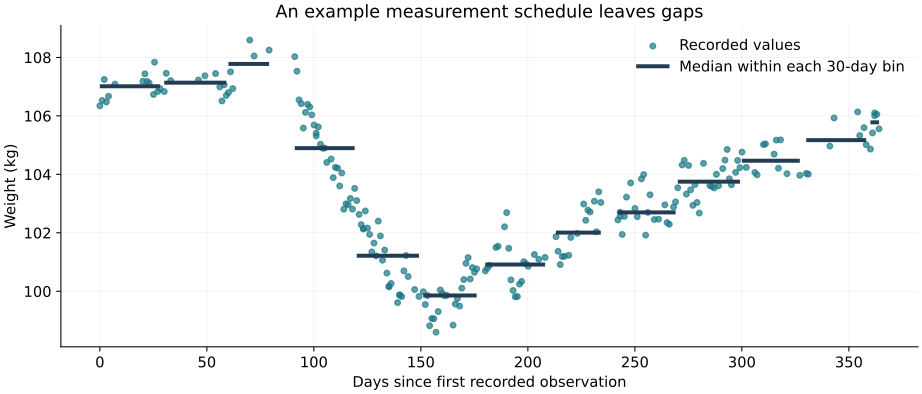
Observed measurements leave unmeasured days
Example data from the main scale-app source: 218 instantaneous records on 211 reporting days. Points retain repeat measurements; median segments describe only observed records in each bin.
View full-size figureHow this figure was made
Select the highest-record-count source group (bundle plus display name) within the full reporting year. Plot every selected observation against elapsed days since its first start timestamp. Compute medians in non-overlapping 30-day elapsed-time bins and draw each segment only between that bin’s first and last observed timestamps. Do not fill missing days or join bins. No source names, absolute dates or record identifiers are shown.
How does weight relate to BMI and body composition?
Body Mass Index combines weight with height. All 218 main-source weight records matched BMI at an identical timestamp and source group. Their ratios were consistent with a fixed height, but no independently recorded Height was available in the study window. Agreement therefore supports a consistency check, not verified height or proof of a particular producer algorithm.
Body Fat Percentage and Lean Body Mass can add composition context when present. They were absent here, so the observed weight trend cannot be divided into fat, muscle or water changes.
Why is data missing or different between apps?
Check whether a weigh-in reached the scale app, whether its Apple Health sharing permission is enabled, and whether the same entry appears in Health. Manual entries and imported records can coexist. Comparing the most recent observation or a source-specific trend is more useful than summing records or treating missing days as zero kilograms.
Understanding your records
Recording frequency, source and coverage affect what you can conclude from this data. Read the recording guide.
- One record
- A discrete body measurement written by the producing app; source and measurement conditions govern interpretation.
- Frequency
- Measurement or logging cadence, without a fixed HealthKit-wide schedule. Repeated entries are not necessarily independent measurements.
- Context
- Compare readings from a consistent scale and source under similar measurement conditions; keep repeated weigh-ins and source changes visible.
- Coverage and gaps
- The year snapshot contains 229 raw records. Missing days or an absent type remain unavailable, not zero measurements.
- Summaries
- Use source-specific trends or a recent observation. Summing a discrete body measurement is not meaningful; sample averages can overweight repeated sessions.
- Metadata
- Producer metadata may identify manual entry or import identifiers. Metadata does not independently verify device calibration or the calculation method.
Recording guidance reviewed 2026-10-14