You check your Apple Watch after a restless night and notice your HRV has dropped. The next day, you wake up with a scratchy throat. This isn't a coincidence — your heart rate variability detected something was off before you felt a single symptom.
HRV is quietly becoming one of the most valuable metrics on consumer wearables. Unlike heart rate, which counts beats, HRV measures the tiny timing variations between beats — and those variations reveal a surprising amount about your nervous system, stress, and recovery.
What Is HRV?
If your heart rate is 60 BPM, your heart doesn't beat exactly once per second. The intervals might be 0.9s, then 1.1s, then 0.95s. Heart Rate VariabilityHeart Rate Variability: The variation in time intervals between consecutive heartbeats, measured in milliseconds. Higher HRV means more variability; lower HRV means more regular intervals. captures these differences.
A healthy heart doesn't beat like a metronome. More variability means your heart can rapidly adapt to changing demands — standing up, responding to stress, recovering from a sprint. Less variability suggests your body is under strain.
How Apple Watch Measures It
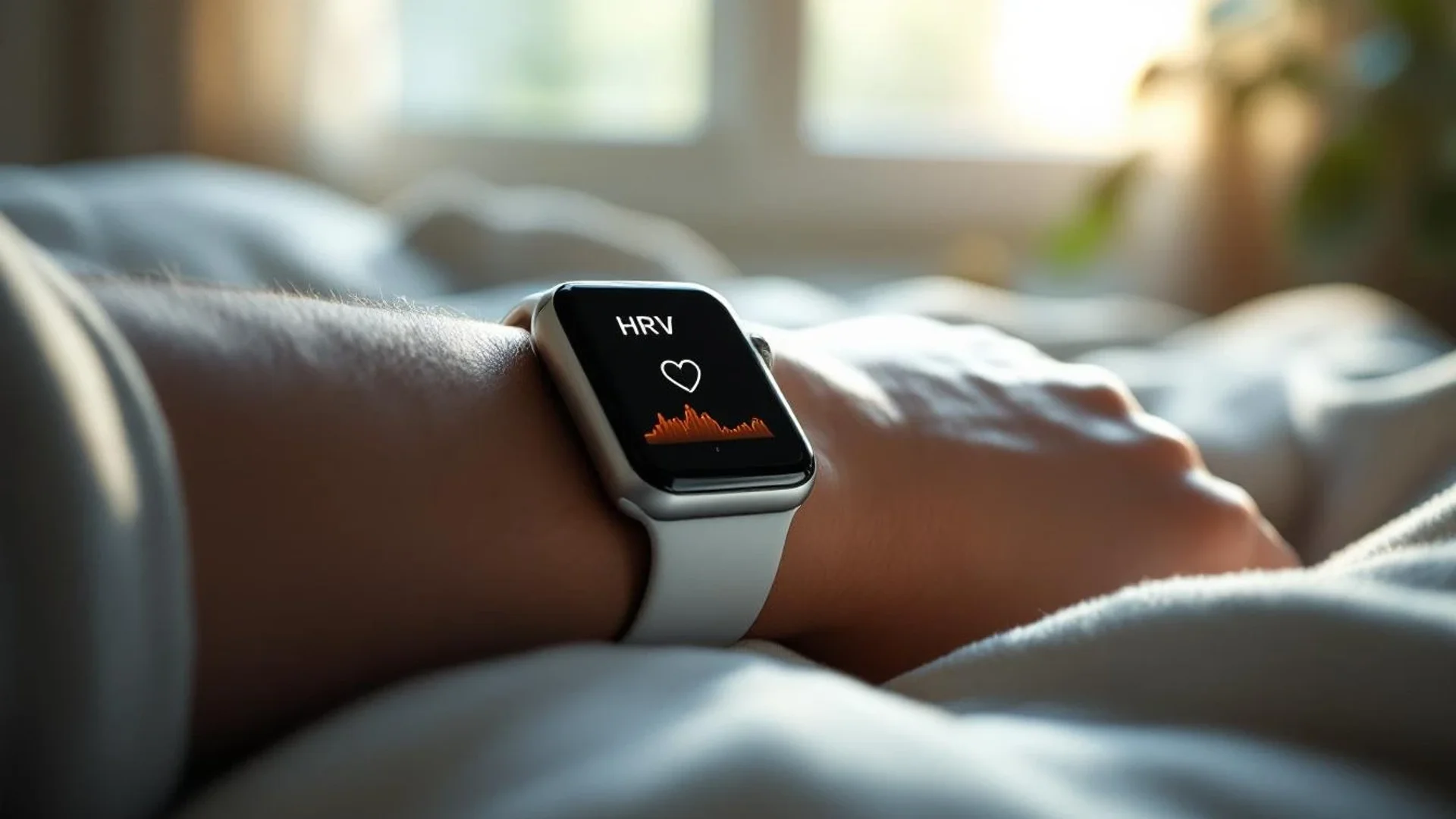
Apple Watch uses its optical heart sensor to detect blood flow changes in your wrist. Green LEDs shine into your skin, photodiodes measure light absorption, and algorithms identify individual beats from the signal. The watch then calculates the time between consecutive beats (called NN intervals) and reports their standard deviation — a metric called SDNN.
Apple Watch captures these readings periodically throughout the day, especially during inactivity. The most reliable readings come overnight while you're in a stable, rested state. You can also trigger one through the Breathe app.
What the Numbers Mean
There's no universal "good" HRV. Values vary dramatically by age, fitness, and genetics.
| Population | Typical Range | Notes |
|---|---|---|
| Adults (short-term) | 20–70 ms | Apple Watch typical range |
| Healthy young adults | 100–200 ms | Overnight measurements |
| Older adults (65+) | 50–100 ms | Age-related decline is normal |
| Athletes | Often >100 ms | High baseline is common |
Apple Watch vs. Clinical Numbers
Clinical studies report 24-hour Holter monitor SDNN values (typically 100–180 ms). These are not comparable to Apple Watch short-term readings. A 40 ms reading from your watch is not the same as a 40 ms clinical SDNN. Only compare Apple Watch readings to other Apple Watch readings.
Higher HRV generally reflects good cardiovascular fitness, effective recovery, and strong parasympathetic activity. Lower HRV may indicate chronic stress, poor sleep, overtraining, or the early stages of illness.
Why It Matters: Your Nervous System
HRV is a window into your autonomic nervous system — the part that operates unconsciously, controlling heart rate, digestion, and breathing.
Your sympathetic ("fight or flight") system speeds up your heart and suppresses variability. Your parasympathetic ("rest and digest") system slows it down and allows natural variation. The balance between the two determines your HRV. Stress, illness, and exhaustion shift the balance toward sympathetic dominance. Recovery, relaxation, and fitness shift it back.
What Affects HRV
Lowers It
| Factor | Recovery |
|---|---|
| Alcohol | 24–72 hours |
| Poor sleep | 1–2 nights of good sleep |
| Illness | Often drops before symptoms appear |
| Intense training | 24–48 hours |
| Chronic stress | Ongoing management |
Raises It
- Consistent aerobic exercise
- Quality sleep (7–9 hours)
- Meditation and breathwork
- Cold exposure
- Time outdoors
- Adequate recovery between workouts
Practical Uses
Training: High HRV in the morning means your body is recovered — push hard. Low HRV means back off. A declining trend over several days is a sign you're overdoing it.
Stress management: HRV gives you objective data on stress you might not consciously feel. Track it alongside stressful events to spot patterns.
Early illness detection: HRV often drops 1–2 days before cold or flu symptoms. An unexplained dip is a signal to prioritize sleep and hydration.
When to See a Doctor
Most HRV variation is normal. But talk to a doctor if you notice:
- Persistent SDNN below 20 ms without explanation
- A sustained drop of 30–40% from your baseline over several days
- Low HRV combined with dizziness, palpitations, or chest discomfort
- Steadily declining HRV over weeks despite a healthy lifestyle
Medical Disclaimer
HRV is a wellness metric, not a diagnostic tool. Apple Watch is not a medical device. Always consult a healthcare provider for medical concerns.
Getting Started
- Wear your watch to bed — overnight readings are the most consistent and reliable.
- Establish a baseline — track for 2–4 weeks before drawing conclusions.
- Log context — note alcohol, hard workouts, stressful events, and illness.
- Watch the trend — your 7-day rolling average matters far more than any single reading.
Key Takeaways
- HRV measures beat-to-beat timing variation, not heart rate changes
- Higher HRV generally means better recovery and health
- Your personal baseline matters more than population averages
- Track weekly trends, not daily numbers
- HRV can flag illness 1–2 days before symptoms appear
- Use it to guide training intensity, stress management, and recovery
Your heart isn't just beating — it's communicating. HRV is how you learn to listen.
Want to dig into your own data? PulsHealth makes it easy to export your complete HRV history from Apple Watch.